dogs
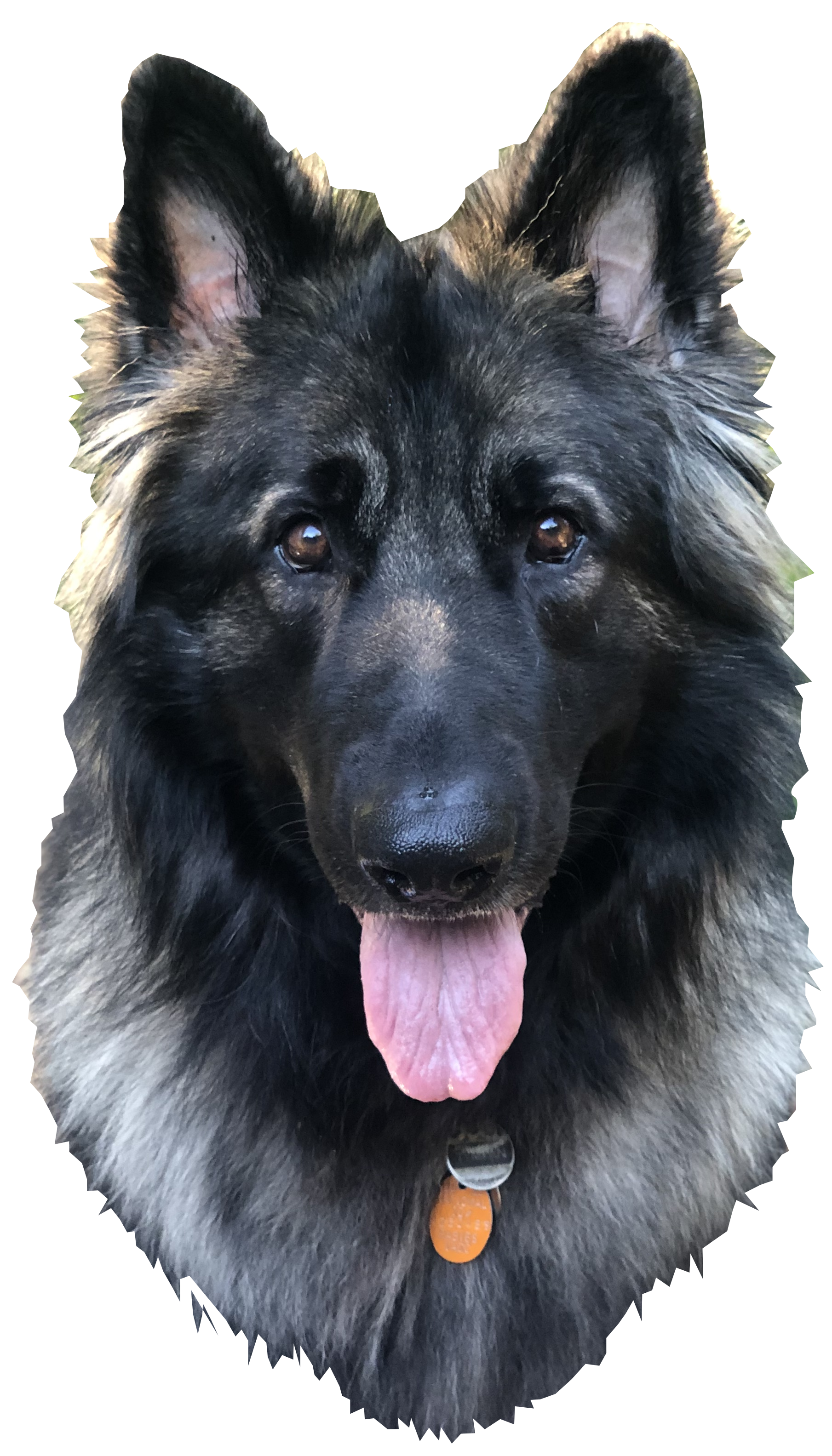
I have always been extremely intense about dogs, so it was a matter of time before I got into the hard mode - shepherds. I was one of those kids with the dog breed book and I made detailed lists about the kinds of (big, working) dogs I wanted to keep as an adult. My AP Art portfolio was about dogs. For years I drew pet portraits for hospitalized patients. I think dogs are delightful.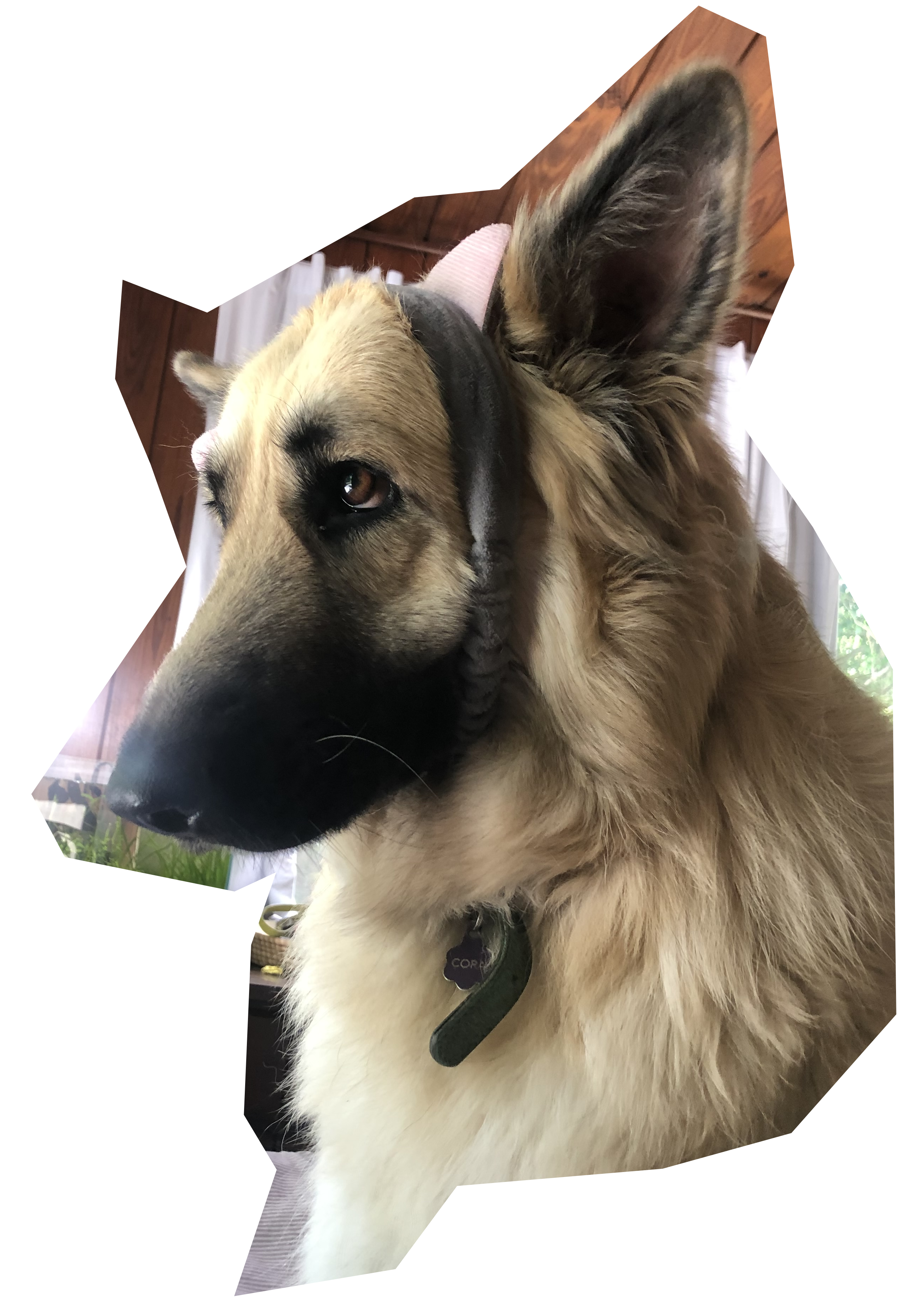 I have two sheps now, a male named T who is 120 lbs and grey/black. He is reactive to people (both on leash and if they are coming into our house) but with 8 years of counter-conditioning, you wouldn't know it outside of our house. He's a scaredy cat and as a puppy was already reactive before and during socialization, as was half of his litter (neither parent is reactive). It is not all how you raise them, sometimes reactivity is genetic, and I wish I had accepted that earlier when people tried to tell me his reactivity was a personal failing of mine. Despite being afraid of new people, if they give him food, he loves them forever and is incredibly snuggly and a manipulative genius.
 Our other dog, the blonde with the eyeliner (and kitty ear headband in this photo). She is not very smart but she is very happy-go-lucky. She loves screaming toddlers and men with power tools or uniforms - she has a type!
I am a force-free amateur dog trainer. I learned how to train my dogs in classes with a CPDT-KA/PPG trainer for puppy classes, reactive dog group classes, and Canine Good Citizen classes as well as from a veterinary behaviorist. I am proud of what I have learned from professionals and how much these dogs - the hard and the easy ones - have grown me. If I continue with growing my skills, it will be in nosework.
dog care/training resources
- Fenzi Dog Sports Academy | I did the nosework and agility into classes in the pandemic. It was affordable and the instructors were good. It was also fun to have a dog in a class with a friend in another state.
- Helix Fairweather: Polite Walking 1 / 2 / 3 | this is old as hell but this is my favorite dog walking video series!
- Line Brushing a Double Coated Dog | learning how to do this was a game changer for managing shedding season with two double-coated pups
- Blue-9 Balance Harness | I swear by this thing for managing dogs that are reactive or pull. It's adjustable at every point so it stays snug and the front clip stays at the front.