st. vincent cemetery, baltimore
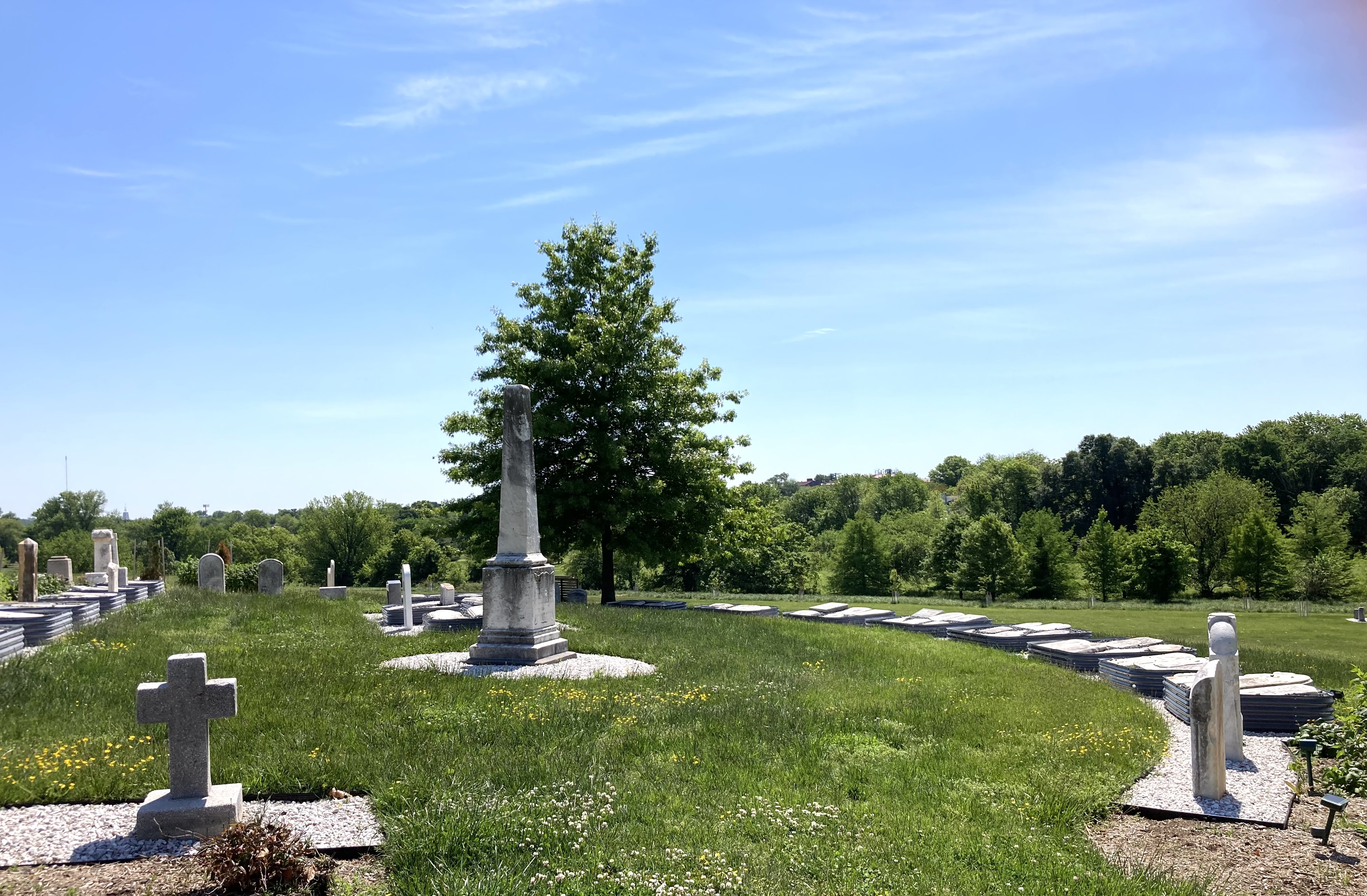
This is, by far, the strangest and probably the most well-documented of the small cemeteries I've been to. It's more of a jumble of headstones near where bodies are buried, so it pushes the definition of "cemetery" a bit. content warning: most of this entry is about grave-robbing, cadavers on the golf course, that kind of thing.
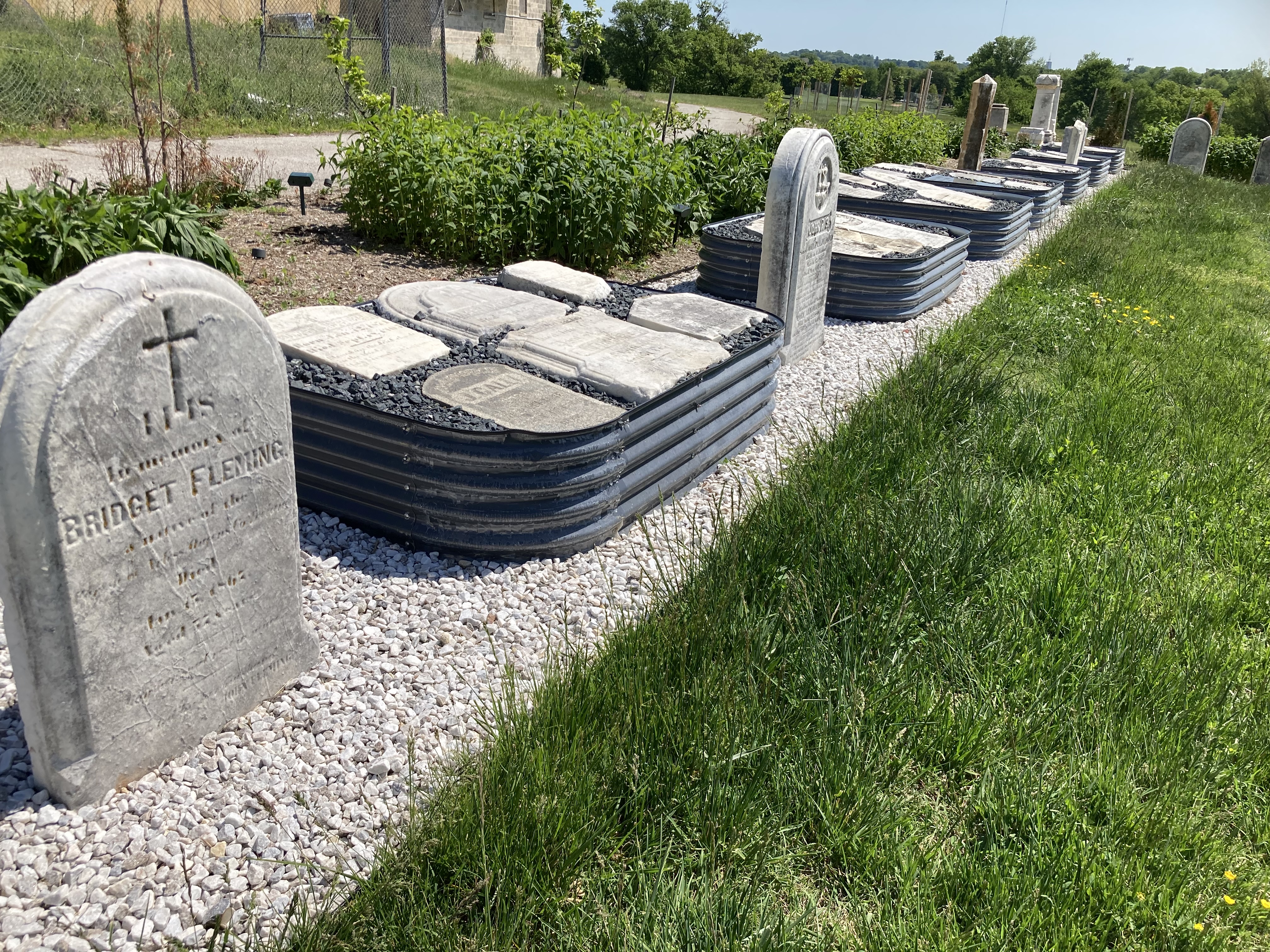
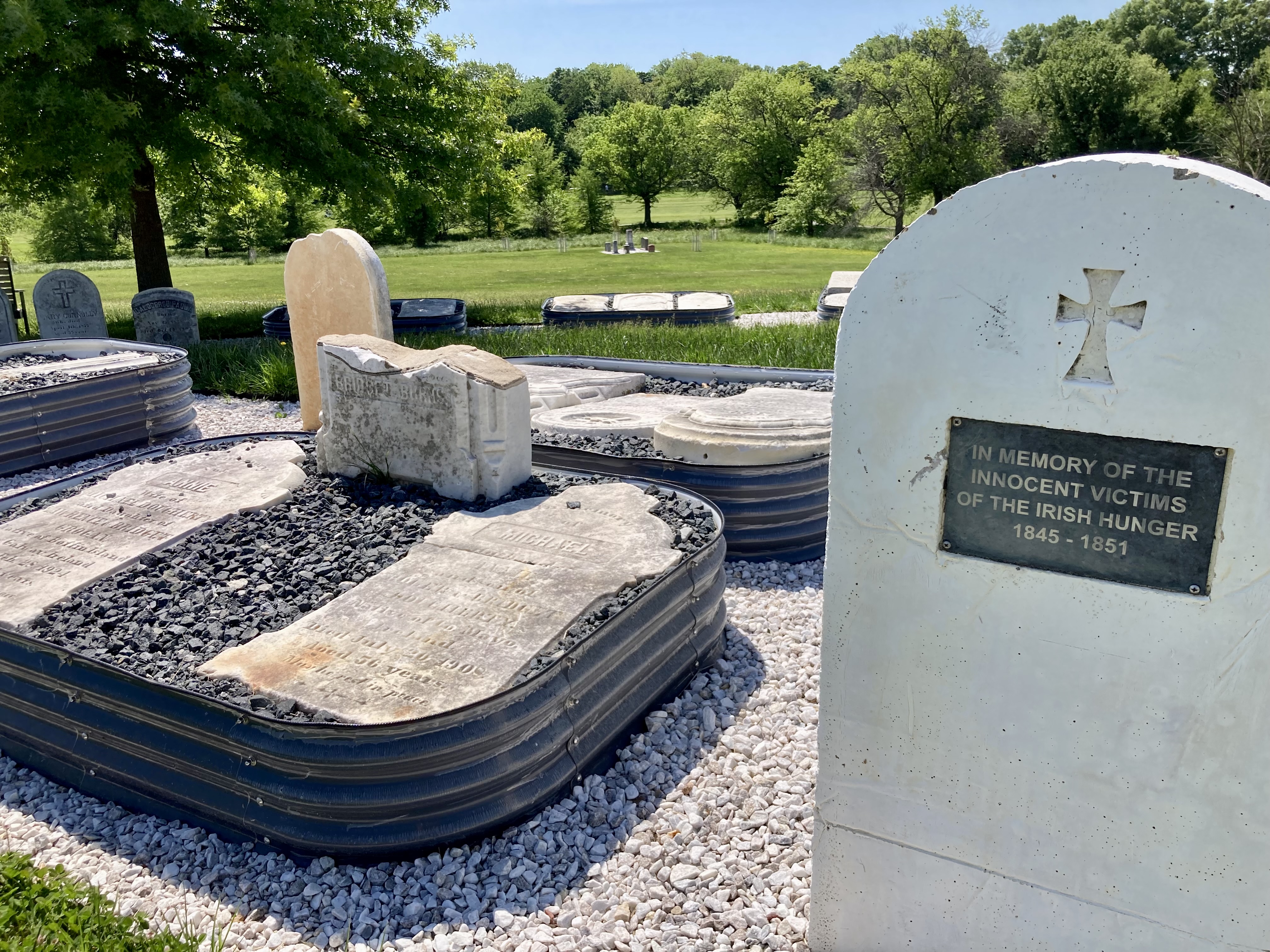
It was opened by St Vincent de Paul in 1853, northeast of the city in what's kind of a cemetery district for the downtown churches. It has a fantastic website that was made by a bunch of descendents who met online and made real world changes with an online community.
The cemetery is located within the confines of the Clifton Park Golf Course in Baltimore, Maryland. Though it looks like open space park land, it was once covered with gravestones and mausoleums. Unfortunately, it suffered from extensive vandalism that included destroying the monuments and disinterring bodies. In order to protect the remains of the deceased, government and church authorities removed all markers. Subsequently, the land became overgrown with volunteer trees and underbrush.
It remained that way for over 30 years until a small group of descendants found each other online and formed the Friends of St. Vincent Cemetery (FoSVC). The mission of the FoSVC is to develop St. Vincent Cemetery into a memorial dedicated to all those buried in the cemetery and that will complement the encircling Clifton Park. There are records for over 3,700 people buried at St. Vincent Cemetery. More records continue to be found due to ongoing research conducted by volunteers and coordinated by FoSVC Archivist Joyce Erway. The most recent list can be found on the “List of Interred” page of this website.
The following are snippets from “What Happened to St. Vincent Cemetery?” as it appeared in the Maryland Genealogical Society Journal.
Over a hundred years after the cemetery was opened in 1853, it became a site for gang initiations. The initiates had to remove a body from a crypt or grave and spend the night in its place. As a consequence, bodies and/or body parts would sometimes appear on one of the greens of the neighboring golf courseThe FoSV group has a nice collection of first-hand accounts from the vandalism era:
The congregation of the parish that owns the property, St. Vincent de Paul of Baltimore, had been dwindling. Reinterment of the desecrated bodies was left to the pastor, Rev. Richard Lawrence. He barely had the resources to keep the church open and follow the church’s mission of ministering to the growing homeless population surrounding it. All the same, Father Lawrence personally took up the gruesome task of reinterring bodies that had been removed from their graves.
Finally, at the top of the hill we encountered the mausolea. I don’t remember how many were there, but I do remember that they had been opened, the shelves were empty, beer cans littered the floor, and there was graffiti written on the walls. This was the first time I had seen a mausoleum. Outside one mausoleum lay a lidless coffin that appeared rusted and was badly beaten up —like the one in the photo on the group site. It looked like it had been burned. There was nothing inside it. Lester went over to the coffin and as he did, he tripped over something. I looked down at what at first I thought was a tree branch, but upon further observation, saw two shoeless feet and yelled, “It’s a body!” Lester had tripped over this man’s legs.
At this point, I think we were all in shock about what we were seeing. This poor man was headless and his body had been burned. He was missing his pants, and his bow tie and black suit jacket were tattered (I think he was wearing a tuxedo). He was missing his left lower arm, his humerus bone showing. The other arm was fully intact and his hand lay across his sternum. He was perfectly stiff and his leathery , browned skin made him looked mummified. Obviously he had been dead a long time. I’m guessing he was about 5’ 5”, not very tall. On the mausoleum that we assumed was his was the date 1920 above the door. I think there were four shelves in it. We were very scared and said a prayer for him.
Body parts all over the golf course seems like such a bad 80s horror trope to be real, but it is weird walking around the park knowing that body parts and whole corpses were found all the time for three decades. The city and church didn't have funds for a caretaker or a watchman, and so eventually the cost-effective solution was to move the monuments into a big pile so that the would-be graverobbers couldn't find the bodies.
Over the next several decades, the land was taken over by nature. Ailanthus trees and weeds grew up to obscure what was once there. During this time, some families of the deceased were doing genealogical research, a hobby that grew along with access to the internet. One by one, these researchers found one another online in message boards devoted to genealogy.
This online community grew to a dozen or so people, and they decided to meet face-to-face. Since everyone was new, the initial meetings were more group therapy sessions than planning meetings. Once plans were developed and began to take hold, dates were set to start cleaning up a lot of vegetation. At first glance, the task looked overwhelming, especially considering most of the workers were over 60 years old. More help arrived as word started to reach the public through news stories about the newly formed Friends of St. Vincent Cemetery.
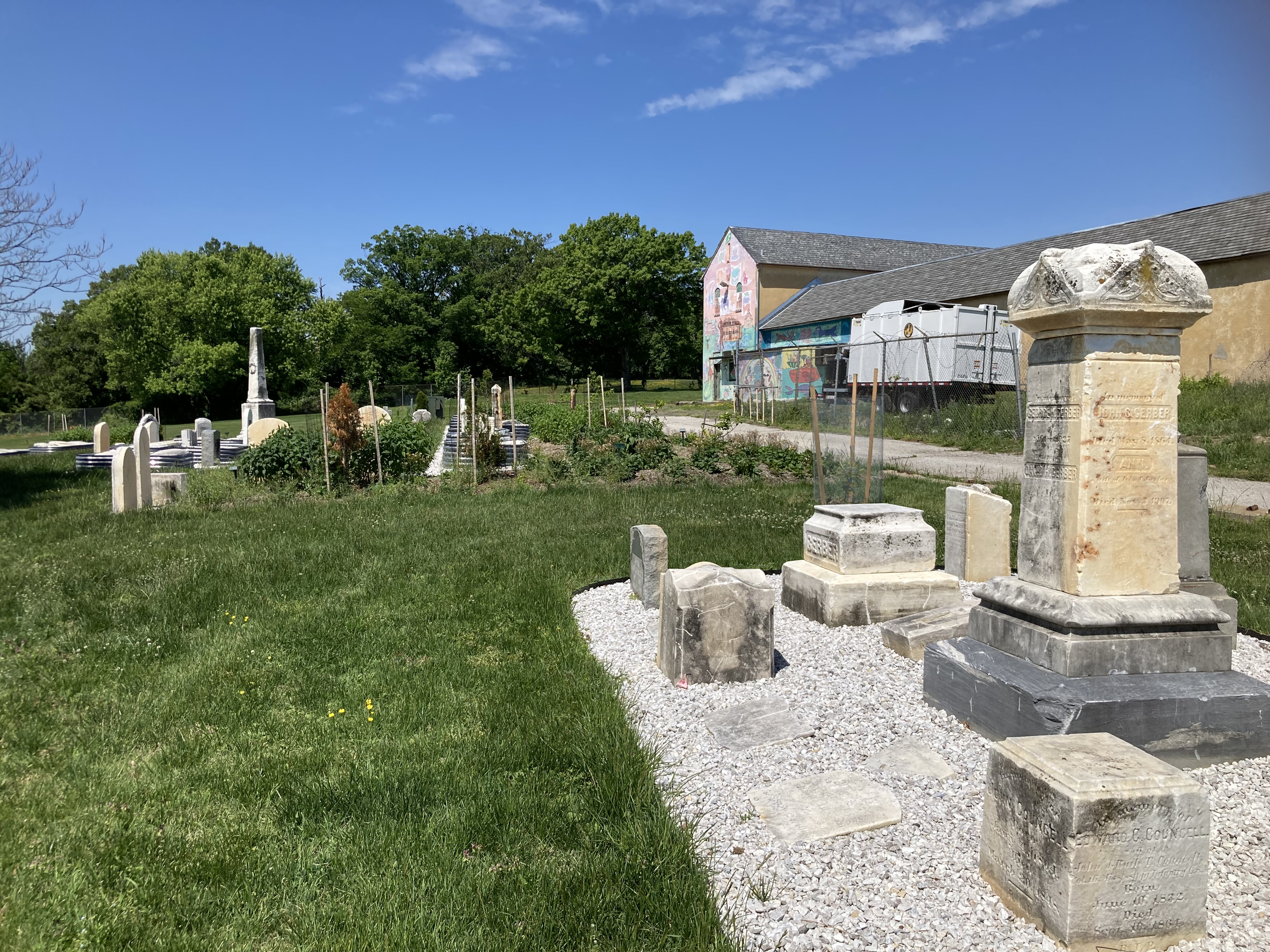
Over the years they've managed to find funding sources to get the cemetery into its kind of bizarre but dignified current state, which is less-dignifiedly placed next to the aging polo barns for Johns Hopkins' Clifton estate.