the circular churchyard, charleston, sc
This is a church in South Carolina I've driven by a million times, but had never been beyond the gates. It's unusual in that it doesn't really have a proper denomenation and was was founded by a mix of Presbyterians, Huguenots, and English Congregationalists in the 1680's. Its parish house was designed by Robert Mills, who also lived in Baltimore and designed both the Baltimore and DC Washington Monuments as well as the White House.
The church was a hotbed for revolutionary support, and was hit by a cannonball and occupied by the British. It is also about a block away from the site of the 1860 Democratic convention, where the party officially split over the issue of slavery and snowballed into secession and civil war.

The church is also unusual in its history of integration from 1820-1860, which is still uncommon in most historic southern churches. The contemporary church has a lot of informative signage around climate change and how the congregation views climate justice as a religious issue.
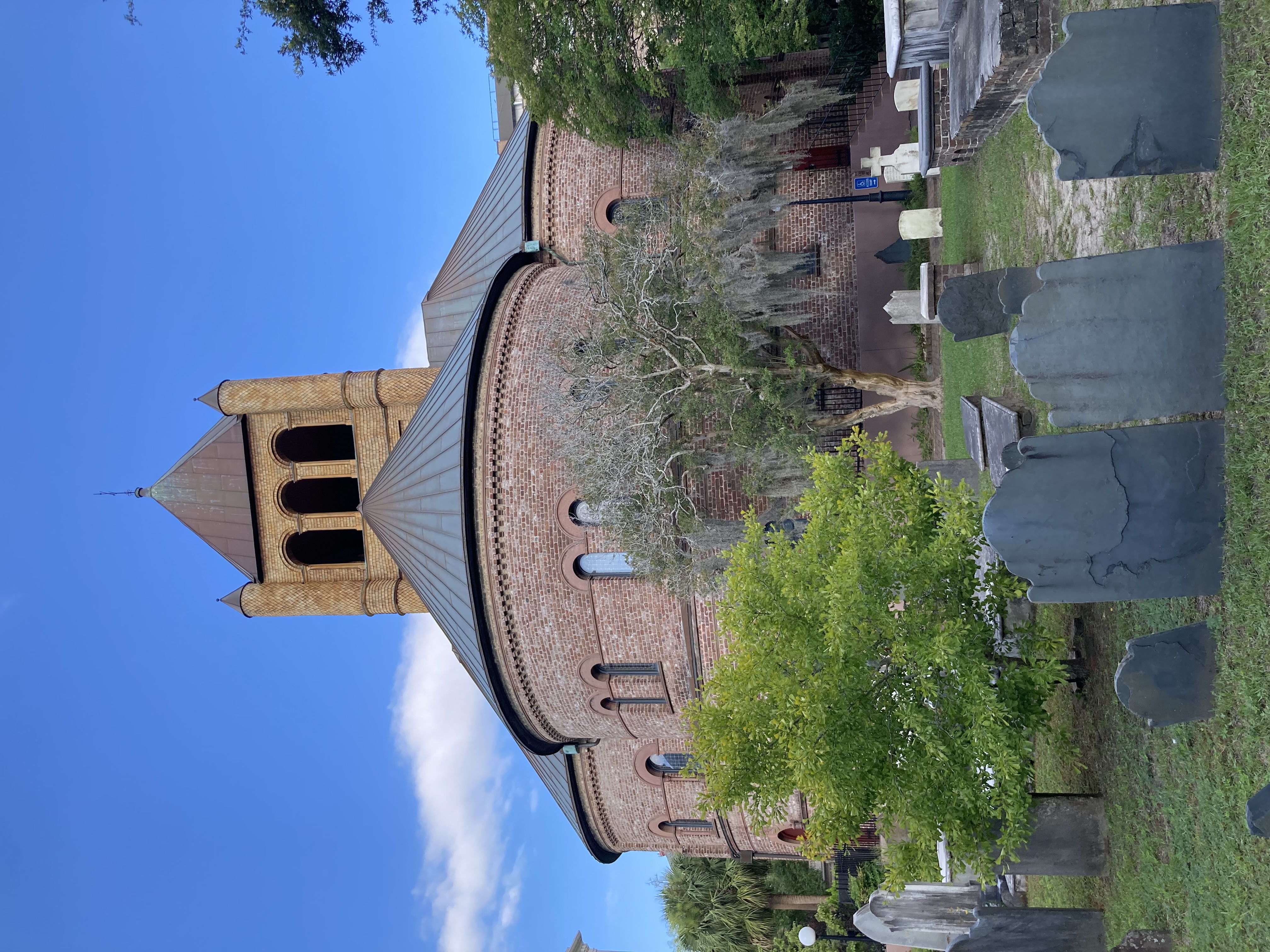
My family is into historic architecture and preservation like some families are into sports, so I have grown up on Robert Mills. He didn't design this church in the picture (it burned in 1861 in a fire) but he did build the parish building (still standing)
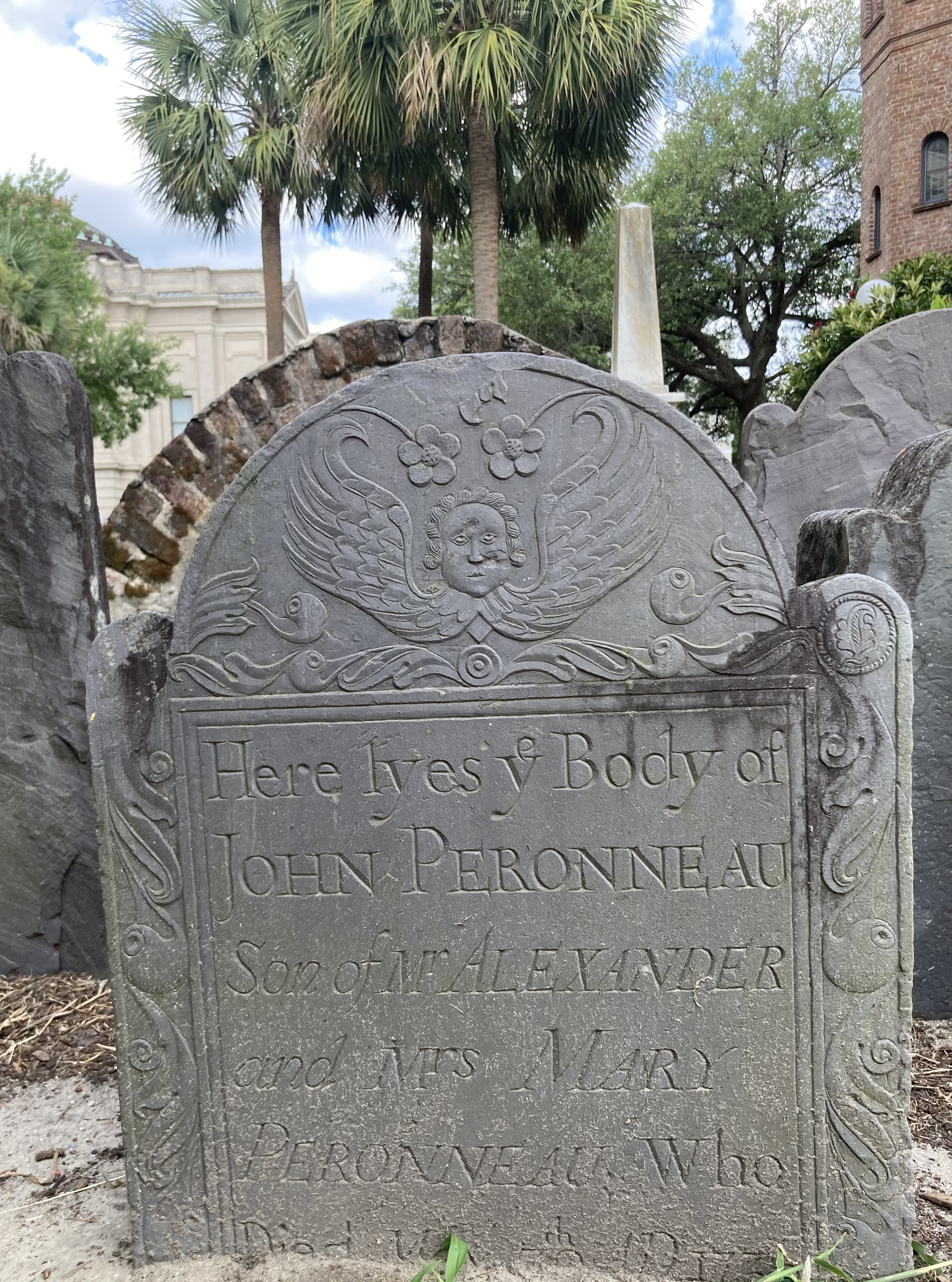
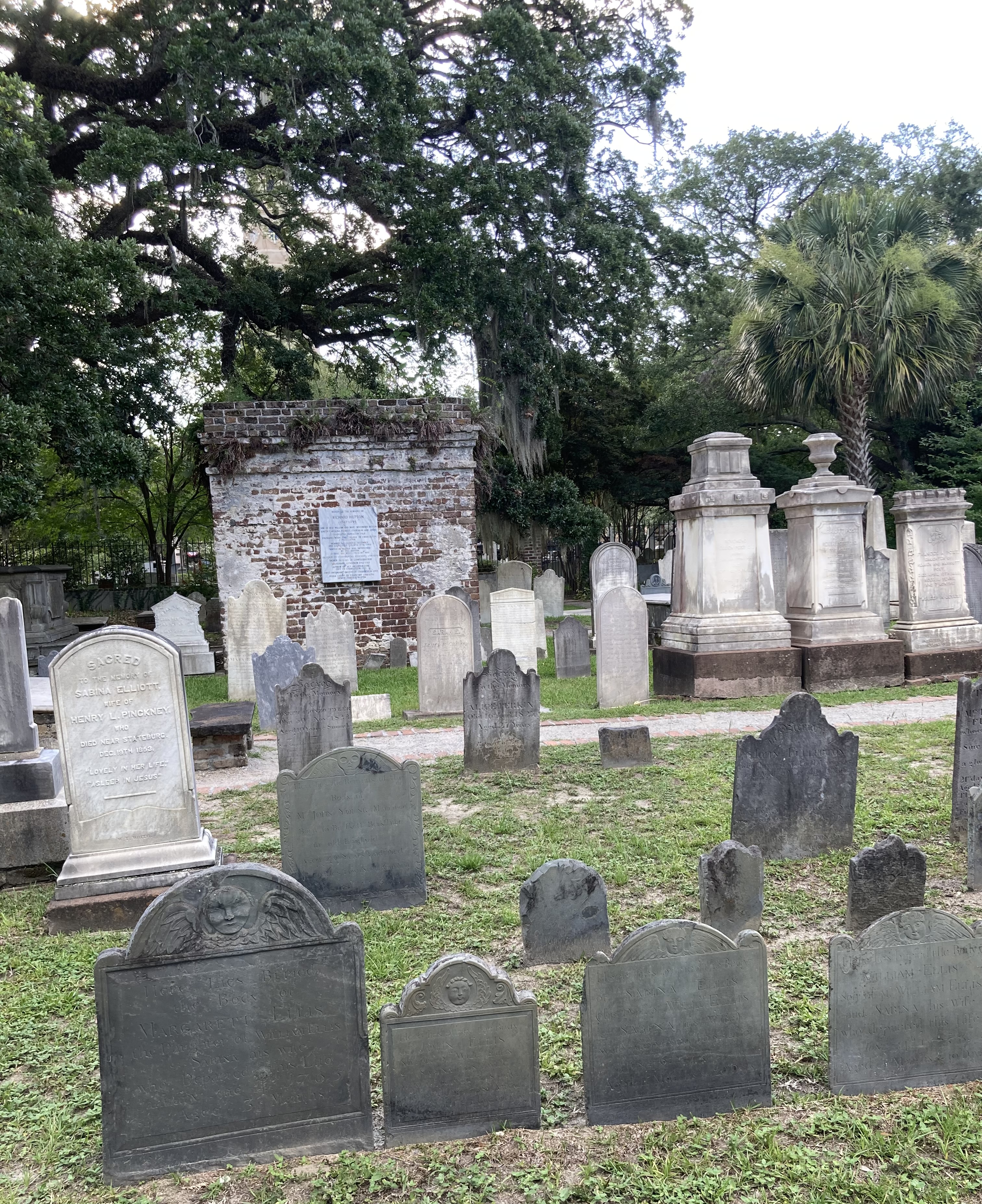
The other odd thing are the amount of slate stones, which date back as far as 1729 and are in much better shape than the more modern granite and marble markers.
From the Circular Church's website:
The oldest gravestones are made of slate and were shipped from carvers in New England. These slates with images and medallion portraits have been called by one writer "an extraordinary and irreplaceable legacy of our artistic and cultural past." According to one gravestone historian, there are more of these unusual 18th century slate stones in this graveyard than anywhere else in the country. Our challenge is to preserve and maintain these historic artifacts.
The evolution of gravemarker artwork over the years reflects the changing attitudes toward death more graphically than do the inscriptions.
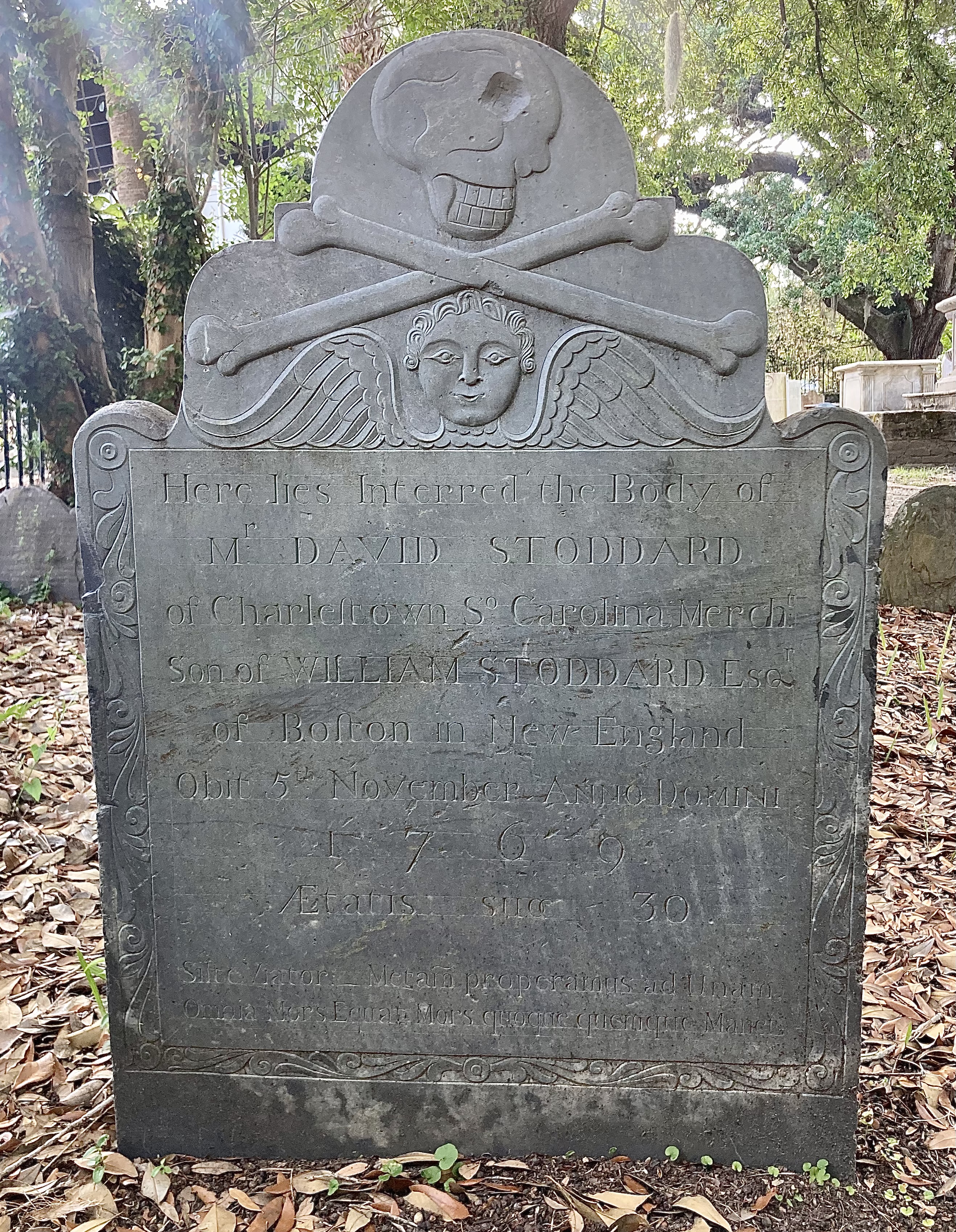
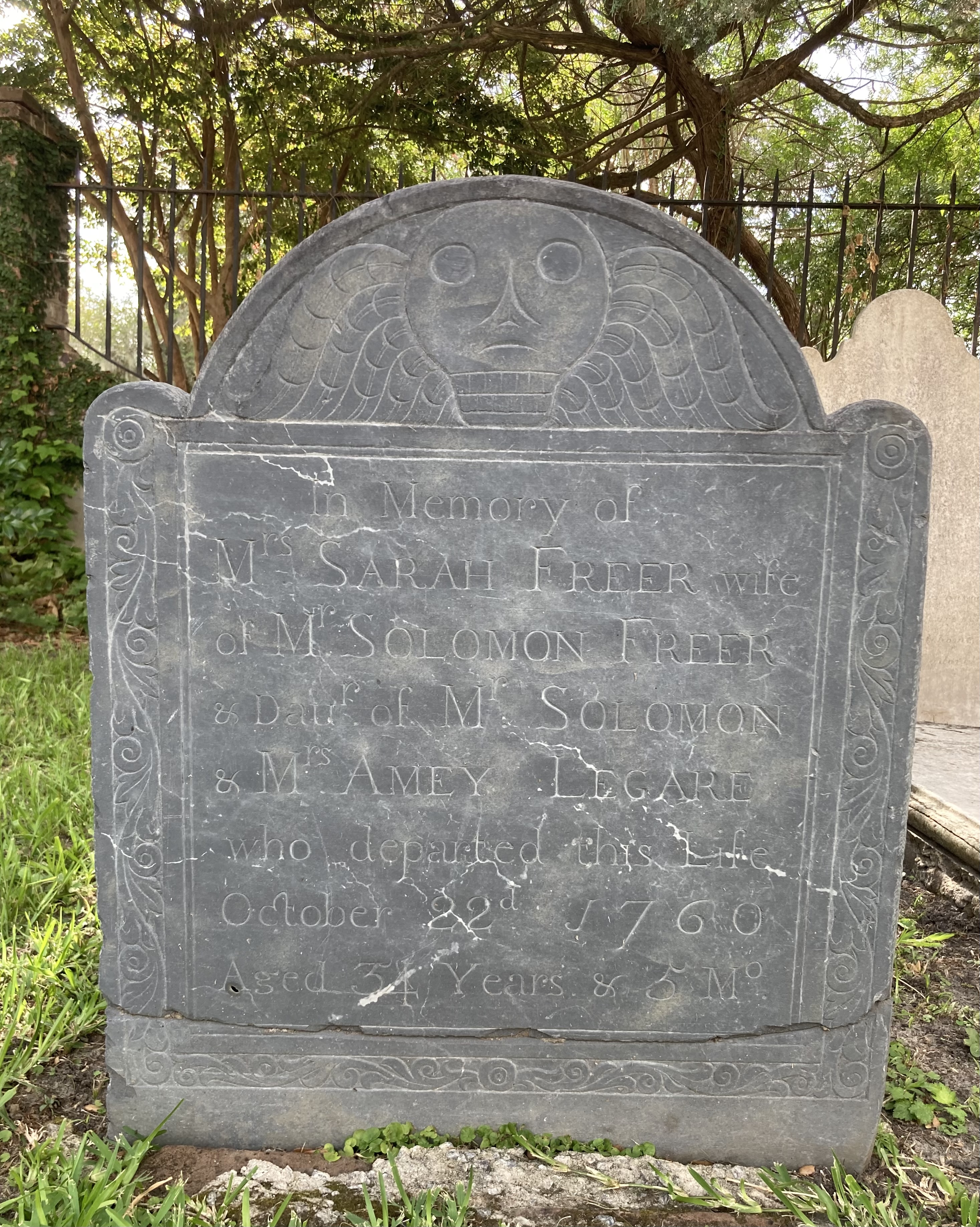
Markers in the 1600s typically were inscribed with stark skull-and-crossbone markings, the ancient symbol of death.
crossbones were beginning to be replaced by wings and the resulting image was being called "death's head." So, although the skull continued to emphasize death, the wings were introducing the idea of flight from the Earth or life after death.
As the years passed, the sculptors emphasized life more and more, and death less and less. At first they began softening the skulls' appearances by adding upper lips and eyebrows, and later they even began adding noses and mouths.
In the early stages of this change, beginning around 1730, the sculptors inserted the mouth between the skull's nose and teeth. And although the teeth were retained, they were dropped down so they looked more like high collars or disfigured chins.
Still later, around 1740-45, the teeth disappeared from the skulls altogether. The wings remained, however, and at that point the skulls lost all their harshness. Instead they looked more like angels' faces -- and in fact, that's about what they were. They weren't even called skulls any longer, but "soul effigies" because they represented departing souls.
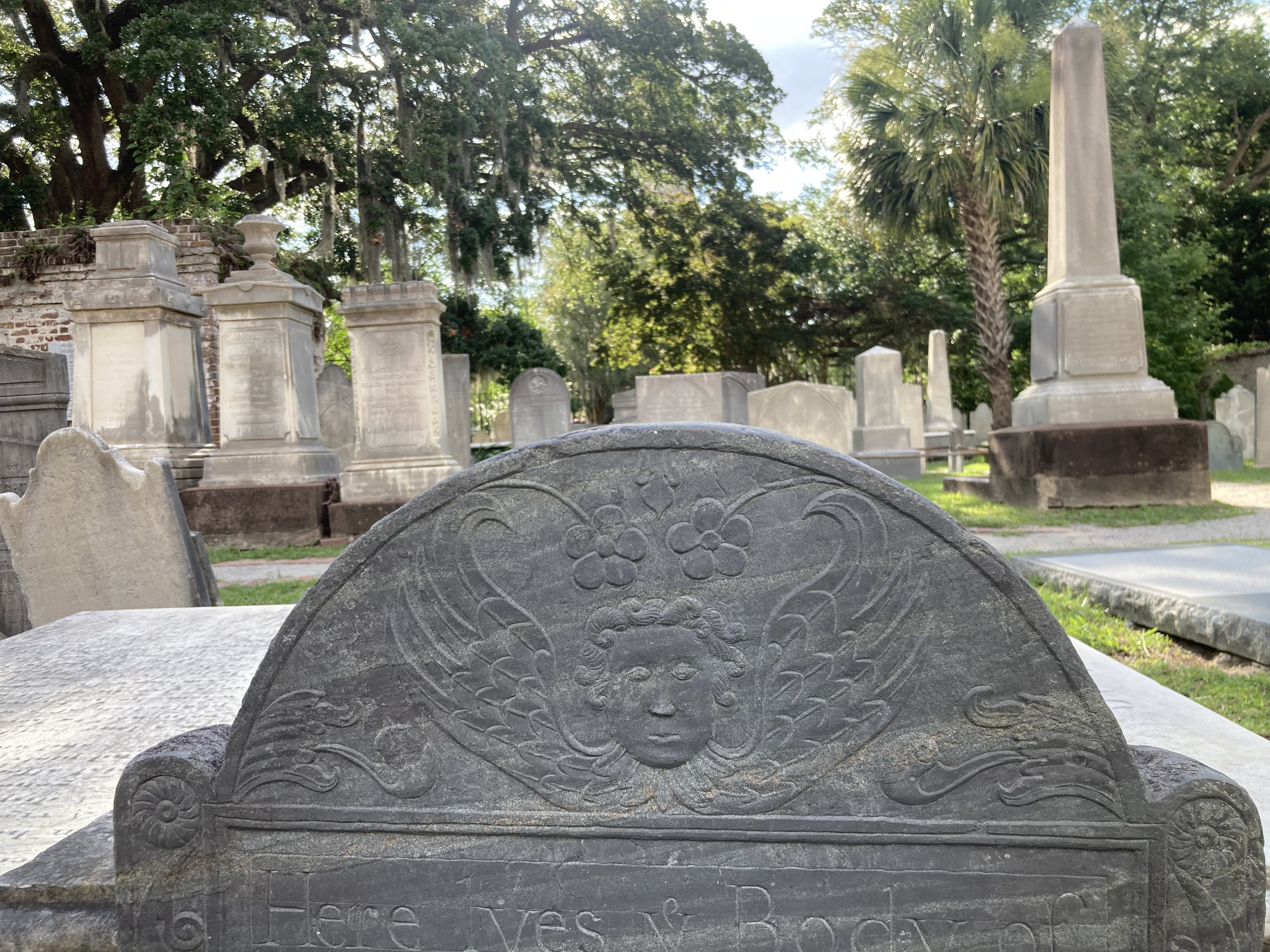
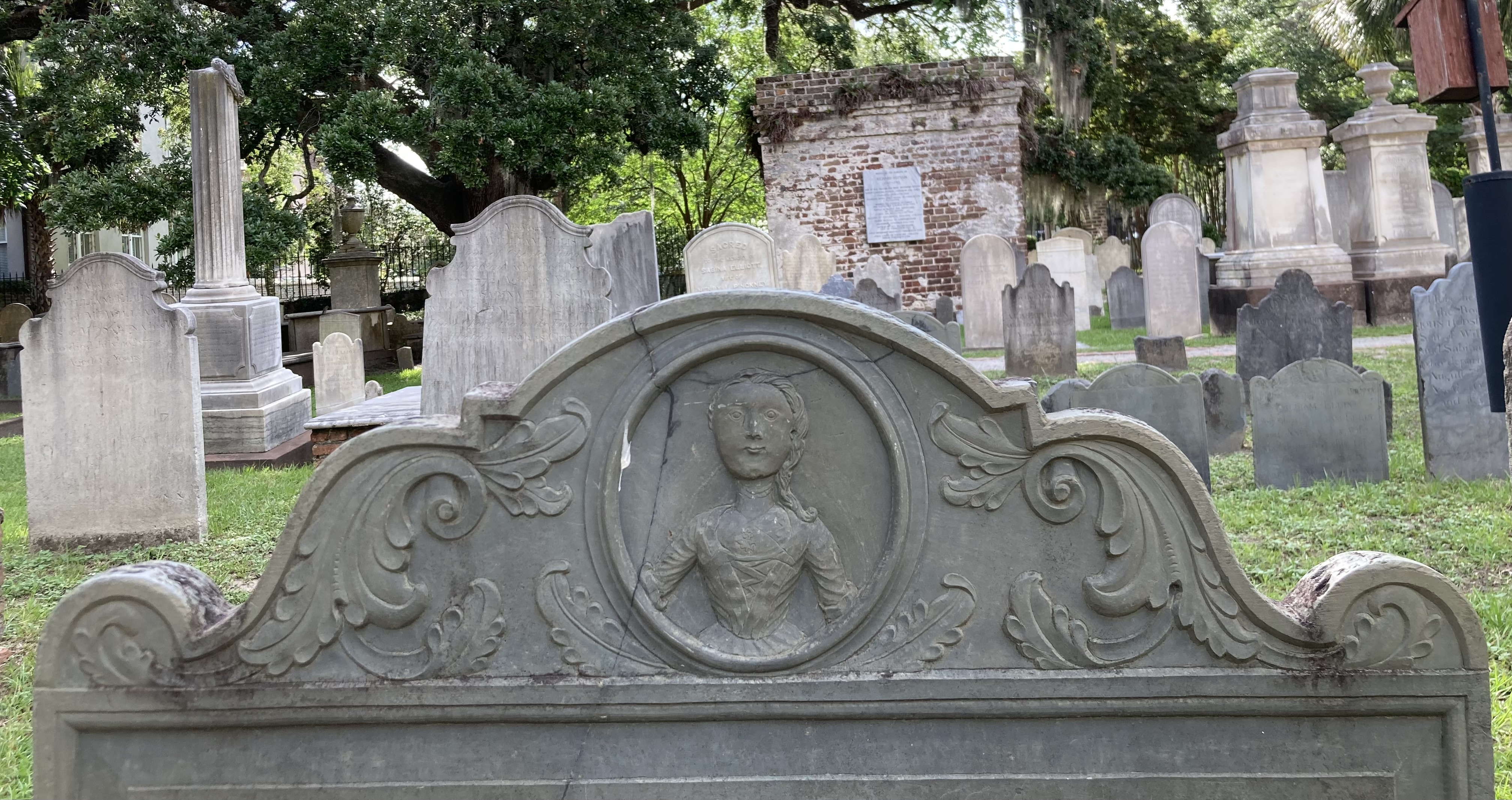
The major contribution of the eighteenth century to American gravestone art was portraiture. The term "portraiture" is used in gravestone studies to mean natural representations of the deceased (although whether the carver attempted to capture an individual likeness rather than simply to represent a type is a question that is still being studied). While there are many examples of portraiture in Circular's churchyard, none have been located in any other South Carolina or Georgia towns.
Most of my information came from onsite plaques supplemented by a variery of Wikipedia articles (linked). Additional information and historical photos can be found at this page for Roots and Recall.